Answer: Do benign tumors require radiation therapy?
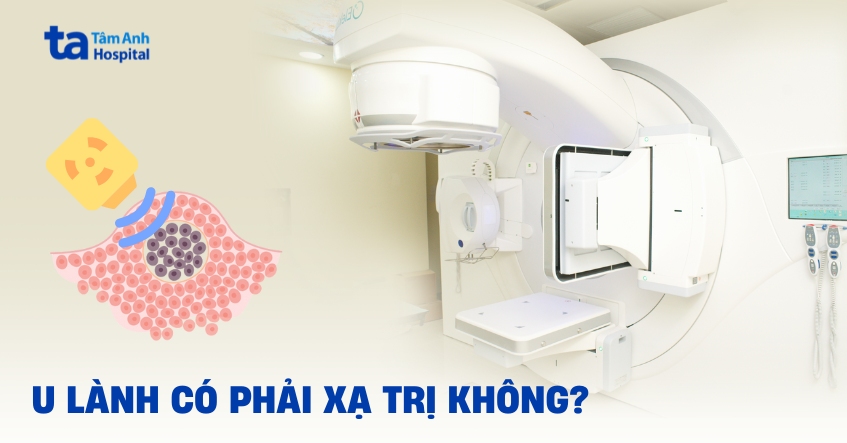
Do benign tumors require radiation therapy?
In most cases, benign tumors do not require radiation therapy. Benign tumors are abnormal cell proliferations that do not invade surrounding tissues and do not metastasize to other organs. However, the tumor can continue to grow, causing compression of nearby structures, leading to pain, dysfunction or deformity.
In most cases, benign tumors only require periodic monitoring, or surgical removal if the tumor causes symptoms or affects aesthetics. Radiation therapy is not the first choice for benign tumors. However, doctors may consider prescribing radiation therapy in the following situations:
- The tumor is located in a difficult surgical location or has a high surgical risk: such as meningioma, pituitary tumor, lesions near the spinal cord or close to important structures (large blood vessels, cranial nerves, etc.). In these cases, surgery can increase the risk of nerve damage or serious complications, so radiotherapy is considered a less invasive option.
- Tumors cause symptoms due to compression of surrounding tissue: the patient may have pain, aching, weakness, endocrine disorders, vision disorders or prolonged discomfort... Radiotherapy helps stop the tumor from growing or shrink it, thereby reducing symptoms.
- Tumors that recur or cannot be completely removed after surgery: in cases where surgery does not remove all diseased tissue or the tumor recurs many times, radiotherapy can be used to help control recurrence.
Some types of benign tumors have been shown to respond well to radiotherapy: such as some benign tumors of the central nervous system, bone tumors, hemangiomas, keloids... In these cases, radiotherapy can help with long-term control.
However, the radiologist always considers the patient's age, physical condition, underlying disease and risk of side effects. The decision to use radiotherapy is always based on the principle that the benefits must outweigh the risks and is individualized for each patient.

What types of benign tumors can be indicated for radiotherapy?
Some benign diseases and tumors may be indicated for radiotherapy by specialists, including:
1. Benign brain tumors and central nervous system tumors
Types of benign brain and central nervous system tumors that may require radiotherapy include:
- Meningiomas.
- Pitary tumors.
- Some cranial nerve tumors, skull base tumors, etc.
These cases are often considered for radiotherapy (including stereotactic radiosurgery or conventional radiotherapy) when surgery is difficult, the risk is high, or there is residual tumor after surgery. (1)
2. Soft tissue tumors, keloid scars, and some other benign skin lesions
Low-dose radiotherapy after keloid surgery can help reduce the rate of keloid recurrence. Some other benign soft tissue lesions can be treated with radiation, depending on each specific case.
3. Bone tumors and benign bone lesions
For fibromas, giant cell tumors of bone... radiation therapy can be used when:
- The tumor cannot be completely removed by surgery.
- High surgical risk.
- The tumor recurs many times after treatment.
4. Glomus tumor
Glomus tumors are often located near large blood vessels and nerves in the head and neck area, making surgery complicated, with a high risk of bleeding and nerve damage. In this case, radiation therapy can be a treatment option or adjuvant treatment for long-term tumor control.
5. Angiofibroma (nasopharyngeal angiofibroma)
Although benign, angiofibroma contains many blood vessels, which can cause difficult-to-control nosebleeds. Depending on the stage and degree of invasion, the doctor may consider combining surgery and radiation therapy.

The above list is for illustrative purposes only, not all benign tumors in these groups require radiotherapy. Whether benign tumors require radiotherapy depends on: histological type, location, size, symptoms, surgical results, systemic disease and patient preferences.